
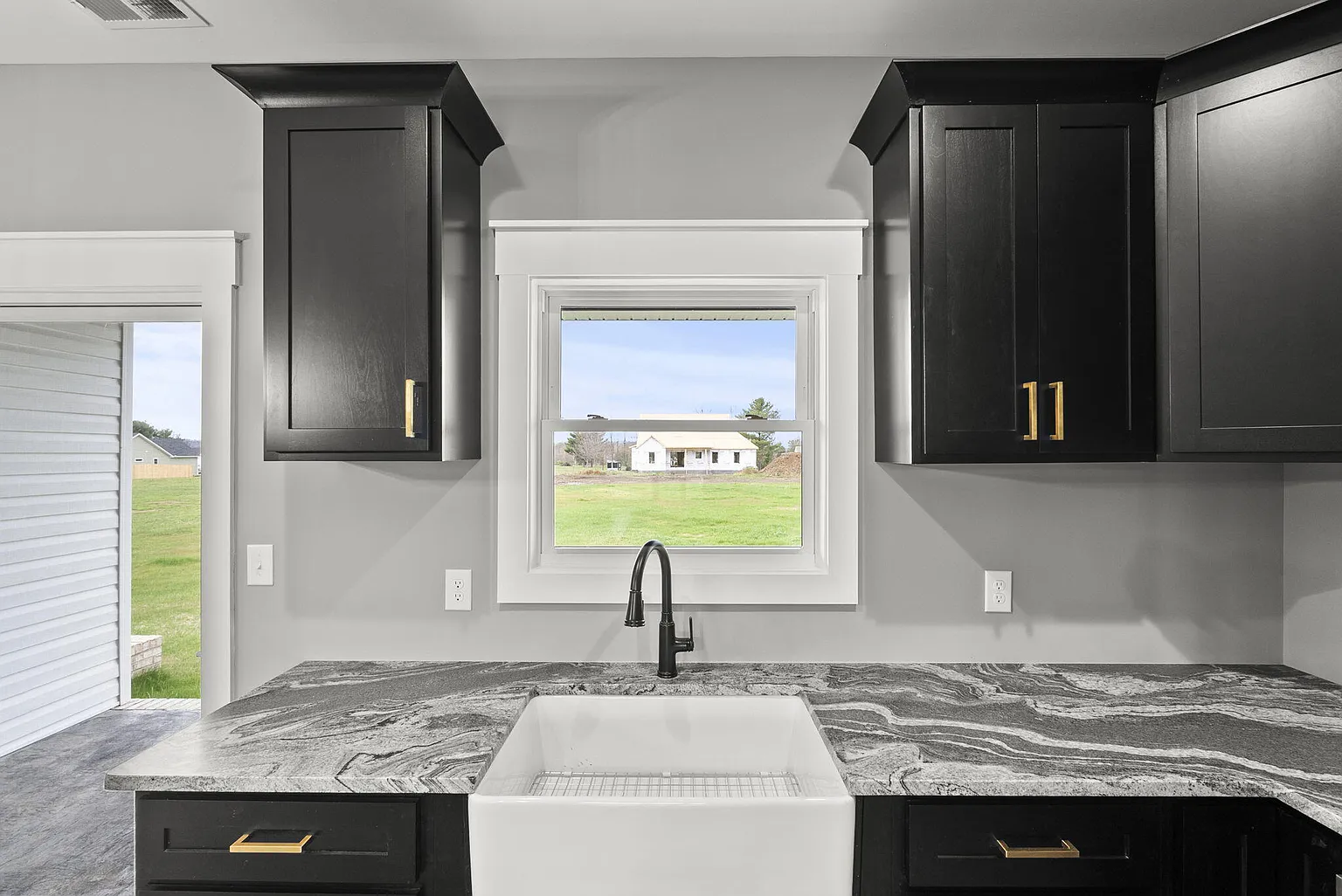
Yes, remodeling in winter works well in Danville, KY, as long as the project is mostly indoors. Kitchens, bathrooms and whole-home interior updates are not weather dependent the way foundations are. The keys are timing the work around the holidays, controlling dust in a closed-up house, and pulling the Boyle County permit.
Winter changes how a remodel feels more than how it gets done. The windows stay shut, the family is home more, and the holidays put a deadline on the kitchen whether anyone planned one or not. This guide covers what suits the cold months, what is better left for spring, and how to plan a remodel around Thanksgiving and Christmas.
What kind of remodeling suits winter
The simple test is whether the work happens inside a closed, heated house. If it does, cold weather has little effect on it. If it involves new footings, a slab, or opening the house to the weather for long stretches, winter adds steps.
Projects that fit the season
- Kitchen remodeling: cabinets, counters, layout changes and new lighting all happen indoors.
- Bathroom remodeling: tile, fixtures, showers and vanities are interior work.
- Whole-home remodels where the shell of the house stays closed: wall removal, floor plan changes and finish updates.
- Basement and bonus room finishing, where the space is already enclosed.
Projects that often wait for spring
Work that needs new concrete or a lot of exterior exposure is more weather sensitive. That includes new footings for a porch or attached garage, large roof tear-offs, and siding or window work that leaves the house open. The section on concrete below explains why.
A remodel can also be split. The interior work happens in winter, and an exterior piece, such as a covered porch from the garage and outdoor living page, follows in spring.
Remodeling before or after the holidays
Thanksgiving falls on November 26 in 2026, and Christmas is a Friday. For a kitchen especially, the real question is whether the room needs to be usable for hosting.
If the house is hosting
Starting a kitchen remodel in mid-November when the house is hosting Thanksgiving is a gamble. Material deliveries, inspection scheduling and holiday closures can all shift dates. If the kitchen has to work for the holidays, a safer plan is to use November and December for design, selections and the permit, then start demolition after the new year.
If the holidays are quiet
If the family is traveling or hosting elsewhere, the holidays can be a reasonable stretch to have a kitchen or bath out of service. Plan a temporary kitchen with a microwave, a coffee maker and a utility sink, and set aside a room for it away from the work area.
Use the holidays for decisions
Either way, the weeks around the holidays are good for decisions that hold up a remodel later: the layout, cabinet style, counters, tile, fixtures and lighting. Having every selection made before the first wall comes down keeps the project from stalling while a choice gets made.
Dust and indoor air in a closed-up house
In summer, a remodel can be aired out through open windows. In winter, the dust and fumes stay inside with the family. The U.S. Environmental Protection Agency publishes best practices for indoor air quality during remodeling that apply directly.
Isolate the work area
The EPA describes isolation as sealing the work area so there is no direct access to occupied parts of the home. For high-dust jobs like demolition, it says a simple flap system may not be enough and full isolation is needed. It also recommends taping poly sheeting over supply and return registers in the room being worked on, so the heating system does not spread dust through the house.
Ventilate even when it is cold
The EPA notes that exhaust ventilation, such as a fan blowing out of the work area, helps remove dust and other pollutants. It recommends maximum ventilation during installation of new materials and for at least 72 hours afterward. In winter, that may mean a window fan in the work room with the door sealed.
Keep people away from the work
The EPA advises keeping occupants, especially children, away from the work area and cleaning the site before they return. In a winter remodel, that usually means planning which entrance and which rooms the family will use while the work goes on.
Older homes: lead paint and asbestos
Remodeling an older home brings two specific concerns.
Lead paint in homes built before 1978
The EPA advises homeowners to assume paint in homes built before 1978 contains lead unless an inspection shows otherwise. Its Renovation, Repair and Painting Rule requires that anyone paid to disturb painted surfaces in a pre-1978 home be certified and that their workers be trained in lead-safe work practices. The EPA says any renovation in a pre-1978 home with lead-based paint can easily create dangerous lead dust. That matters more in winter, when the house is sealed.
Asbestos in older materials
The EPA says homeowners planning to remodel may want an inspection by an accredited professional, because remodeling can disturb building materials. It warns against sanding or leveling asbestos flooring or its backing, and notes that removal may be required when a remodel will disturb asbestos-containing material. Undamaged material that will not be disturbed should be left alone.
Remodeling permits in Danville and Boyle County
Kentucky enforces the 2018 Kentucky Residential Code, based on the 2015 International Residential Code, according to the Kentucky Department of Housing, Buildings and Construction.
What needs a permit
Boyle County’s Building Inspection office, on West Main Street in Danville, lists renovations and remodeling among the projects that require a building permit. Its list also includes decks and porches, garages, and storage structures over 200 square feet. The county directs permit paperwork to the Boyle County Building Inspector. Confirm the right office for the specific address, since the jurisdiction can depend on where the property sits.
Inspections to expect
Boyle County’s residential permit application lists three inspection stages:
- Foundation: when the footer is excavated, reinforcement is installed and it is ready to pour.
- Framing: when the project is fully framed, after service rough-in inspections, and before insulation and drywall.
- Final: when all final service inspections are complete.
An interior remodel may not have a foundation stage at all. A remodel that moves walls, plumbing or wiring usually still reaches a framing stage, because those rough-ins need to be checked before drywall closes them in. Boyle County lists separate building, plumbing and electrical inspectors.
Zoning questions
Most interior remodels do not change the footprint of the house, so zoning rarely comes into it. If the remodel adds space or a structure, Danville-Boyle County Planning and Zoning is the office for setbacks and land use questions.
If the remodel includes concrete work
Some remodels include a small exterior piece: a new porch footing, a garage slab or a step. That work is where winter matters.
Cold weather concrete
The American Concrete Institute defines cold weather for concrete as any time the air temperature has fallen to, or is expected to fall below, 40 degrees Fahrenheit during the protection period. A National Institutes of Health technical bulletin on cold weather concrete says it is critical for concrete to reach at least 500 psi before it freezes, and that it should not be allowed to freeze during at least the first 24 hours after placement. It also says the subgrade should be compact, not frozen, and free of snow, ice and frost.
Frost depth in Boyle County
The Kentucky Residential Code sets minimum footing depth by county in Table R403.1.4. Boyle County is in the group set at 24 inches, measured from finished grade to the bottom of the footing. Mercer and Lincoln counties are in that same group.
None of this makes winter concrete impossible. It means the work needs protection, and some homeowners choose to schedule it for spring and keep the winter months for interior work.
A winter remodeling checklist
- Decide whether the project is fully interior or has an exterior piece.
- Decide whether the kitchen has to work for the holidays.
- Make every selection before demolition starts.
- If the home was built before 1978, plan for lead-safe work practices.
- Ask about asbestos if old flooring, insulation or ceilings will be disturbed.
- Plan how the work area will be sealed and ventilated.
- Set up a temporary kitchen or bathroom plan.
- Confirm the permit and inspection steps with the Boyle County office.
A remodel that adds square footage is a different project. The home additions page covers that, the guide to planning a home addition over winter walks through the planning steps, and the guide to questions to ask before signing a construction contract applies to both.
Frequently asked questions
Is winter a good time to remodel?
For interior work, often yes. Kitchens, bathrooms and enclosed spaces are not weather dependent. The tradeoffs are a closed-up house, which makes dust control more important, and holiday schedules. Exterior work with new concrete takes more precautions in cold weather.
Should you remodel a kitchen before or after the holidays?
If the kitchen has to work for Thanksgiving or Christmas, plan and select over the holidays and start after the new year. If the household is traveling, the holidays can be a reasonable time to have the kitchen out of service.
Do you need a permit to remodel in Boyle County, KY?
Boyle County’s Building Inspection office lists renovations and remodeling among the projects that require a building permit. The county lists separate plumbing and electrical inspectors. Confirm the office for the address before work begins.
Can concrete be poured in winter in Kentucky?
Yes, with precautions. Cold weather for concrete starts when air temperature is at or expected to drop below 40 degrees Fahrenheit. Concrete should reach 500 psi before freezing, must not freeze in its first 24 hours, and should never be placed on frozen ground.
Can you live in the house during a winter remodel?
Often yes, with planning. The EPA recommends sealing the work area off from occupied rooms, covering heating registers in the work room, ventilating, and keeping occupants, especially children, away from the work area.
Planning a remodel in Danville
Whitis Contracting handles additions and remodels in Danville, Perryville, Junction City and nearby Harrodsburg. Every project is built on a fixed-price contract: the number you sign is the number you pay. The company is family owned and insured.
Winter is a good time to plan. Get in touch to talk through a remodel, or look through the portfolio for ideas.
Sources
- Boyle County Fiscal Court, Building Permit
- Boyle County Residential Permit Application
- Kentucky Department of Housing, Buildings and Construction, Boyle County contacts
- Kentucky Department of Housing, Buildings and Construction, Currently Enforced Codes
- 2018 Kentucky Residential Code, Table R403.1.4
- U.S. EPA, Best Practices for Indoor Air Quality when Remodeling Your Home
- U.S. EPA, Renovation, Repair and Painting Program
- U.S. EPA, Protect Your Family from Exposures to Asbestos
- NIH Office of Research Facilities, Concrete Construction Precautions during Cold Weather